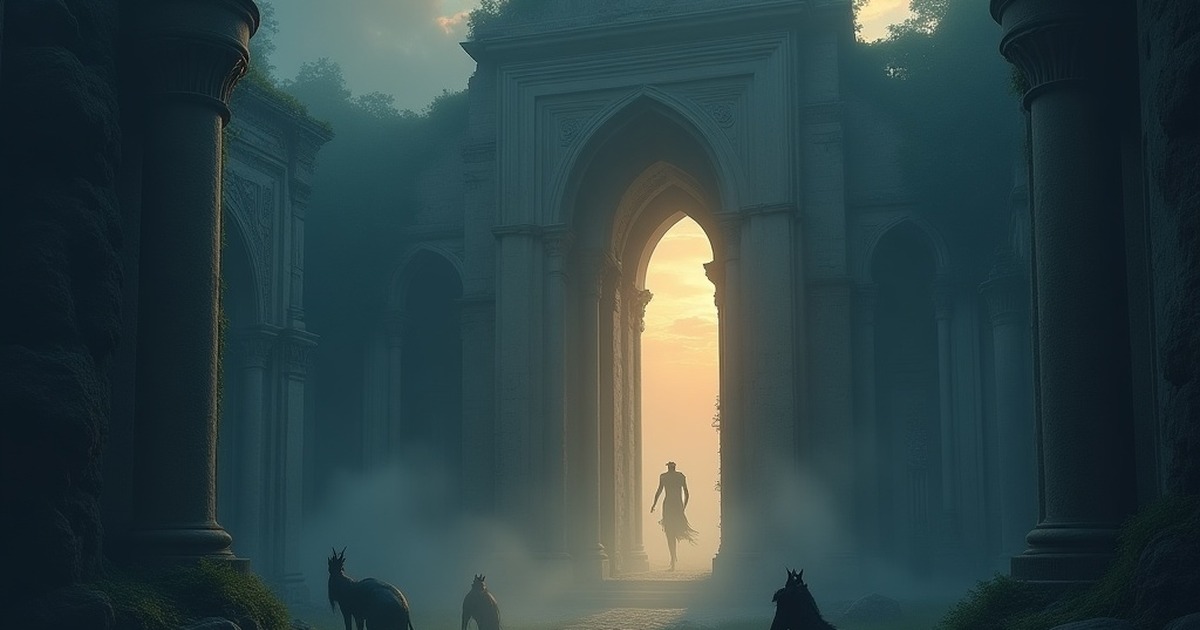
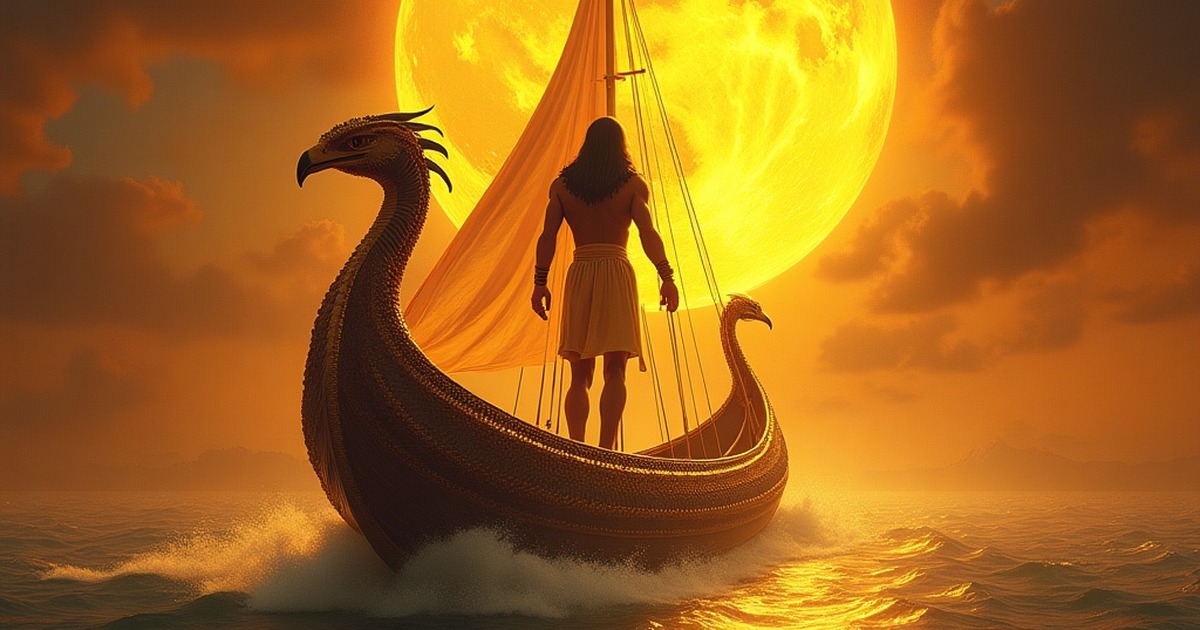
When you first encounter stories of Atlantis and Lemuria, they seem equally tantalizing—civilizations swallowed by the sea, their secrets locked beneath fathoms of water. But here's what most people miss: one of these theories emerged from a philosopher's allegorical dialogue written 2,400 years ago, while the other was constructed by 19th-century occultists and theosophists to fill gaps in evolutionary theory that science has since resolved entirely. Neither continent existed. Yet the difference between them reveals something crucial about how we distinguish between compelling mythology and claims grounded in actual evidence. Plato described Atlantis as a cautionary tale about hubris; modern geology has no trace of it on any ocean floor. Lemuria, by contrast, was proposed as literal fact to explain animal distribution patterns before continental drift was understood—a hypothesis so thoroughly disproven that even its inventors abandoned it. Today, when geologists map the mid-ocean ridges, trace tectonic plate boundaries with satellite precision, and analyze sediment cores pulled from abyssal plains, they find zero geological support for either. What we do find, however, are real sunken cities like Dwarka in India and Heracleion in Egypt, archaeological treasures with actual human remains, artifacts, and stratigraphic layers that tell verifiable stories.
The Atlantis Narrative: Plato's Philosophical Invention
Plato introduced Atlantis not in a history book or travel journal, but in two dialogues—Timaeus and Critias—written around 360 BCE. The account is meticulously constructed: Atlantis supposedly existed 9,000 years before Plato's own time, was located beyond the “Pillars of Hercules” (modern Strait of Gibraltar), and was swallowed by the sea in a single day and night. What's critical to understand is Plato's literary context. These dialogues use Atlantis to frame a discussion about the ideal state and the dangers of imperial overreach. Socrates, Plato's teacher and the protagonist of most of his works, explicitly questions the plausibility of the story immediately after hearing it in Timaeus, asking whether such a tale is “suitable for our purposes.” This textual framing—the skepticism, the precise setup, the moral conclusion—is the hallmark of philosophical allegory, not historical documentation.
Plato never claimed Atlantis was real in his surviving writings. Ancient scholars like Aristotle, Plato's own student, stated directly that Plato invented the island to make his philosophical points. Strabo and Pliny the Elder, Roman geographers with access to broader historical records than we possess today, treated Atlantis as Plato's fiction. Yet despite this scholarly consensus in antiquity, the legend persisted. Medieval alchemists, Renaissance occultists, and 18th-century antiquarians began reinterpreting Plato's account as suppressed history. By the 19th century, when Ignatius Donnelly published Atlantis: The Antediluvian World (1882), the idea had hardened into pseudo-historical dogma. Donnelly, an American congressman and prolific writer, claimed Atlantis was the source of all ancient civilizations—Egyptian, Mesoamerican, Greek, and more. He drew parallels between flood myths across cultures and argued they must derive from a real cataclysm. The problem: he had no geological evidence, no artifacts, no corroborating inscriptions. He had pattern-matching and speculation. Yet his book sold hundreds of thousands of copies and remains the template for virtually every popular Atlantis theory published since.
Lemuria: The Evolutionary Ghost Continent
Lemuria has an even more peculiar origin story than Atlantis. It was not invented by an ancient philosopher but by a 19th-century zoologist named Philip Sclater. In 1864, Sclater noted something puzzling: lemurs lived in Madagascar and parts of Africa and Asia, but were absent from the intervening territories and entire continents. How did they cross vast ocean barriers? Sclater proposed a now-vanished landmass—which he called Lemuria—that once connected these regions, allowing animals to migrate freely before the continent sank. The hypothesis had internal logic given what was known at the time. Plate tectonics, seafloor spreading, and the mechanism of continental drift were not yet understood. Sclater's Lemuria seemed like a reasonable explanation.
The idea became fashionable in occult circles, particularly among Theosophists. Helena Blavatsky, founder of the Theosophical Society, incorporated Lemuria into her cosmology as a “root race” continent—a stage in human evolution populated by advanced beings who preceded modern humans. The Secret Doctrine (1888) describes Lemurians as physically massive, four-armed precursors to Atlanteans. Blavatsky provided no archaeological evidence, no geological surveys, no skeletal remains. She claimed her knowledge came from hidden esoteric texts and direct spiritual channeling. This framing—wisdom revealed through mystical insight rather than empirical discovery—is the red flag that separates spiritually meaningful symbolism from factual claims about the material world. Blavatsky was a compelling visionary thinker, but her assertions about literal lost continents have been contradicted by every subsequent development in geology and biology.
By the early 20th century, the scientific case against Lemuria had become overwhelming. When Alfred Wegener proposed continental drift in 1912 and it was eventually validated by seafloor mapping in the 1960s, we gained a genuine mechanism to explain animal distribution. Lemurs reached Madagascar through ocean dispersal—island-hopping over millions of years—not via sunken land bridges. Modern genetics confirms this. The lemur lineage diverged from other primates roughly 60 million years ago, long after Madagascar separated from Africa (approximately 88 million years ago). There is no geological window during which a Lemuria could have existed and served as a migration corridor. Today, no credible evolutionary biologist or geologist defends Lemuria as a literal continent. Yet the name persists in popular culture, mystical literature, and fantasy worldbuilding—divorced entirely from its original pseudoscientific purpose.
What Modern Geology Actually Reveals
When we examine the ocean floor with the precision tools available today, the absence of evidence for Atlantis or Lemuria becomes strikingly apparent. Seafloor mapping, conducted via satellite altimetry and multibeam sonar, reveals the topology of every major ocean basin. The mid-Atlantic Ridge, for example, is a continuous underwater mountain chain running roughly 65,000 kilometers. Its rocks are dated and analyzed; the newest oceanic crust forms at the ridge's center, and progressively older crust extends outward symmetrically. This pattern is inconsistent with a sunken continent. If Atlantis had existed in the Atlantic and sunk 9,000 years ago (as Plato claimed), we would see evidence: a continental shelf abruptly terminating, sediment layers disturbed by catastrophic subsidence, volcanic activity localized to a specific region and era. Instead, we observe normal oceanic processes continuing uninterrupted across geological timescales measured in millions of years.
Sediment cores extracted from the Atlantic, Indian, and Pacific oceans provide additional constraints. When a continent sinks, it leaves a traceable geological signature—distinctive mineral assemblages, fossil records of terrestrial organisms mixed with marine deposits, and paleomagnetic reversals that date the strata. Teams from institutions like Scripps Institution of Oceanography and the Max Planck Institute have analyzed cores thousands of meters deep. None show evidence of a recently submerged landmass anywhere in the hypothesized locations for Atlantis or Lemuria. The oldest oceanic crust in the Atlantic basin dates to the Jurassic period, roughly 180 million years ago. There is no crustal material young enough to represent a continent that sank within human history. Volcanic hotspot chains like the Hawaiian Islands or Yellowstone's caldera system show the gradual sinking and erosion of older islands, but this process unfolds over tens of millions of years, not overnight. Plato's scenario of instantaneous submersion is geologically impossible in any ocean basin.
Continental shelves—the submerged extensions of continental landmasses—have been systematically mapped and analyzed. A true lost continent would appear on bathymetric maps as distinctive topography: shallow platforms (continental shelves), deeper basins (abyssal plains), and mid-ocean ridge systems. These features exist in predictable patterns corresponding to tectonic plate boundaries. The continental shelf off the Azores, sometimes cited as “Atlantean” evidence, actually represents normal mid-ocean ridge volcanism. The Azores themselves are young volcanic islands (the oldest emerged roughly 6 million years ago), not remnants of a sunken continent. Similarly, underwater features near Santorini in the Mediterranean—which some researchers have speculatively linked to Atlantis due to the Minoan eruption around 1600 BCE—show volcanic morphology consistent with a caldera collapse, not continental submersion. The eruption was real and catastrophic; it may have inspired later flood myths. But it did not create a lost civilization in the manner Plato described.
The Real Sunken Cities: Dwarka, Heracleion, and Others
While Atlantis and Lemuria remain fictional, actual sunken cities have been discovered, excavated, and studied with rigorous archaeological methodology. These findings demonstrate something important: when a human settlement is inundated by water, it leaves recoverable evidence. We don't need to speculate about Plato's allegory or Theosophical revelations to find lost civilizations. We find them underwater with artifacts, architecture, and human remains intact.
Dwarka, located off the coast of Gujarat in northwestern India, is one of the most significant underwater archaeological sites. It is believed to be the ancient capital of Krishna, a deity central to Hindu tradition, and is mentioned in Sanskrit epics like the Mahabharata. Underwater exploration beginning in the 1980s and continuing through the 2010s has revealed submerged structures, pottery, anchors, and other artifacts dated to around 1500 BCE. The National Institute of Oceanography conducted sonar surveys and diving expeditions that confirmed the presence of a planned urban layout, defensive walls, and residential areas. The submergence was gradual, caused by rising sea levels following the last glacial maximum—a process documented in climate records and supported by sediment analysis. Here is actual archaeology: a settlement that matches textual references, sits at an elevation consistent with sea-level change models, and contains artifacts from the period mentioned in ancient sources. Dwarka is not mythical speculation; it is material culture recovered from the seafloor.
Heracleion, submerged off Egypt's Mediterranean coast near Alexandria, provides an even more dramatic case. This city was described in ancient texts but had been lost for over 1,200 years. In 2000, underwater archaeologist Franck Goddio led an expedition that located the site using magnetometry and diving surveys. Subsequent excavations recovered temples, statues, coins, and stele (stone markers) bearing inscriptions in ancient Greek and Egyptian hieroglyphics. Some artifacts date the site to the 6th century BCE. The city gradually sank due to a combination of natural subsidence and rising sea levels—processes that can be traced through geological and archaeological evidence. Coins from the reign of Ptolemy II (283-246 BCE) and architectural styles align precisely with historical records. When Heracleion was discovered, major news outlets worldwide covered it because it fulfilled the promise of underwater archaeology: lost cities do exist, and we can find and study them when we apply systematic methods.
Port Royal in Jamaica offers another example on a smaller timescale. This pirate haven and trading center was devastated by an earthquake and tsunami on June 7, 1692, causing much of it to sink into the harbor. Contemporary accounts describe the catastrophe in detail. Subsequent surveys and excavations, beginning systematically in the 1960s, have recovered thousands of artifacts—bottles, pipes, buckles, coins—and even preserved wooden structures, all from a well-documented historical moment. The accuracy of eyewitness accounts has been validated by what archaeologists find. These three sites—Dwarka, Heracleion, and Port Royal—share a critical feature absent from Atlantis and Lemuria theories: corroborating textual records, dated artifacts, and geological mechanisms that explain their submersion. They are fascinating not because they match a philosopher's allegory or an occultist's vision, but because they are real and knowable.
Why the Lost Continent Myth Persists
Despite conclusive geological and archaeological evidence against them, Atlantis and Lemuria remain deeply embedded in popular imagination. Understanding why requires examining the psychological and cultural functions these myths serve. Atlantis, in particular, represents a fantasy of lost knowledge—the idea that an advanced civilization possessed wisdom or technology that surpassed our own and vanished before we could inherit it. This narrative appeals to our sense of loss and our suspicion that modernity has sacrificed something valuable. It also flatters us: we are capable of discovering ancient secrets, of recovering what was lost. Donnelly's version—that Atlantis seeded all world civilizations—carried implicit claims about diffusionism: the idea that cultural innovations spread from one advanced center rather than developing independently. This framework, once popular but now widely critiqued by anthropologists, reflected 19th-century assumptions about race and progress that we have largely abandoned.
Lemuria served a different function. In the context of 19th-century evolutionary theory, before we fully understood mechanisms of animal dispersal and genetic inheritance, Lemuria provided a satisfying explanation for biological puzzles. Blavatsky's esoteric version offered something else: a cosmological narrative explaining human origins and spiritual development. For members of the Theosophical Society, Lemuria was not merely a geographical claim but a cornerstone of a system that integrated science, spirituality, and occultism. The appeal was holistic—it promised to reconcile empirical knowledge with mystical insight. When science moved forward (as it does), these claims became untenable, yet their emotional and symbolic resonance persisted.
In contemporary culture, Atlantis and Lemuria function as worldbuilding resources. Fantasy authors, video game designers, and speculative fiction writers use them as settings precisely because they are unmoored from literal history. They can be imagined freely. This is legitimate creative use—using myth as material for storytelling and imagination. The problem arises when people conflate the mythic appeal with historical or scientific credibility. When a book claims Atlantis was “real but suppressed by mainstream academia,” or when a speaker presents Lemuria as “proven by ancient wisdom traditions,” they are trading on the myth's resonance while misrepresenting the evidence. This is where discernment becomes essential: we can honor the symbolic and imaginative power of these stories while clearly acknowledging that they do not describe actual lost continents.
Distinguishing Myth from Pseudoscience
There is a meaningful difference between myth and pseudoscience, and it matters for how we evaluate claims about lost civilizations. Myth is a story that carries symbolic truth—it conveys insights about human nature, morality, or the structure of the cosmos through narrative rather than literal description. Plato's Atlantis, understood as myth, illustrates the dangers of pride and imperial hubris. It is a powerful story precisely because it is designed to communicate a philosophical lesson. There is no deception involved in recognizing it as such. Pseudoscience, by contrast, claims to describe objective reality while employing non-standard methods or ignoring contradictory evidence. It wears the language and conventions of science but lacks its rigor. When someone argues that Atlantis was a real continent based on misinterpreted geological data, selective reading of ancient texts, or channeled “hidden knowledge,” they are practicing pseudoscience.
The distinction matters because it affects how we should respond. Treating myth as myth allows us to engage with it meaningfully—to explore what Atlantis represents, why the story endures, how it shapes our thinking about progress and loss. Treating pseudoscience as science wastes intellectual resources and can mislead people about how knowledge actually works. Geology did not “suppress” evidence of Atlantis; geological methods were refined and improved, making it impossible for a recently-submerged continent to hide. Lepidopterists (butterfly scientists) did not ignore Lemuria because of an institutional bias; they simply found that genetic and fossil evidence explained animal distribution far more comprehensively than a missing continent could.
A practical test: look for specific, falsifiable predictions. Real scientific theories make claims that can be tested and potentially disproven. If Atlantis existed, we would expect to find certain mineral compositions in ocean sediment, specific patterns of volcanic activity, and geological structures consistent with recent continental submersion. None of these predictions hold. Lemuria would require fossils intermediate between lemurs and other primates in the regions where the continent supposedly existed. Genetic analysis shows lemur divergence occurred long after Madagascar separated from Africa. The predictions fail. Claims that survive only by reinterpreting
Related from our network
- Witchcraft on a Budget: How to Start With What You Have (witchcraftforbeginners)
- I Tested the Best Dash cam — Here's What Stood Out (partpickerauto)
- Zotero vs Mendeley: Which Research Tool Wins in 2025? (smarthomegearreviews)
Your Weekly Dose of Inspiration
Journaling ideas, family tips, and gentle inspiration.