- Table of Contents
- Norse Mythology by Neil Gaiman
- What Are the Best Norse Mythology Books for Beginners?
- Which Greek Mythology Books Are Most Accurate?
- Should I Read Norse or Greek Mythology First?
- What's the Difference Between Norse and Greek Creation Myths?
- Are There Mythology Books That Cover Both Norse and Greek Stories?
- 2025's Most Anticipated Mythology Releases
- Digital vs Physical: How to Read Mythology in 2025
- Frequently Asked Questions
- Final Verdict: Building Your Mythology Library
- Related Posts
- Related Posts
- Related Reading
- Related Posts
Table of Contents
- What Are the Best Norse Mythology Books for Beginners?
- Which Greek Mythology Books Are Most Accurate?
- Should I Read Norse or Greek Mythology First?
- What's the Difference Between Norse and Greek Creation Myths?
- Are There Mythology Books That Cover Both Norse and Greek Stories?
- 2025's Most Anticipated Mythology Releases
- Digital vs Physical: How to Read Mythology in 2025
- Frequently Asked Questions
- Final Verdict: Building Your Mythology Library
Norse vs Greek Mythology Books 2025 – Complete Guide
Standing in the mythology section, torn between Odin's ravens and Zeus's lightning bolts? You're not alone. After twelve years of covering literary releases, I've watched the mythology book market explode — and choosing between Norse and Greek collections has never been trickier.
The best Norse mythology books for 2025 focus on Neil Gaiman's Norse Mythology for accessible storytelling and Snorri Sturluson's Prose Edda for authenticity. Greek mythology shines with D'Aulaires' Book of Greek Myths for families and Edith Hamilton's Mythology for comprehensive reference. Your choice depends on whether you prefer Norse fatalism or Greek heroism, raw Viking sagas or polished Olympian tales.
Disclosure: This article contains affiliate links. We may earn a commission at no extra cost to you.
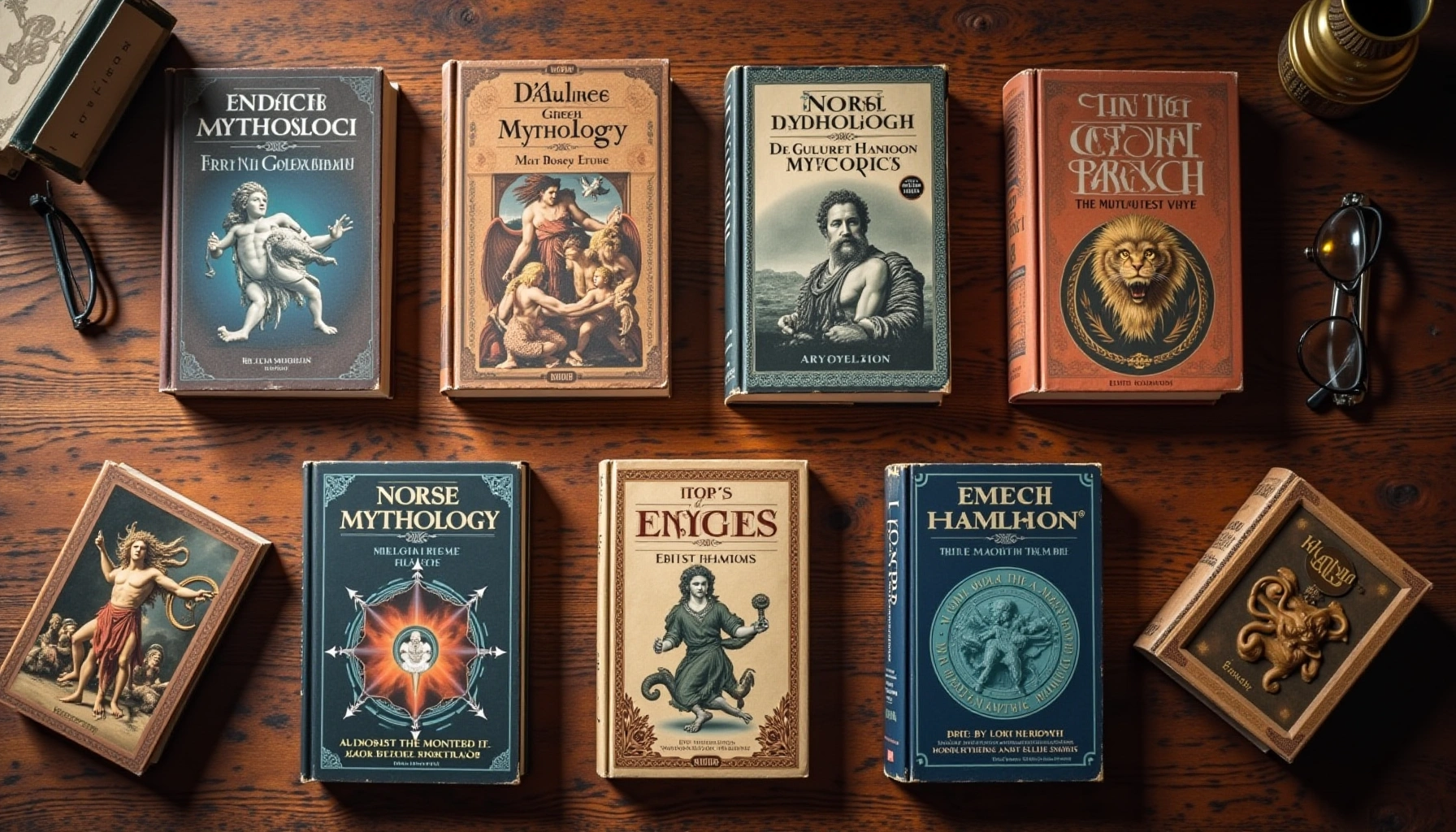
Norse Mythology by Neil Gaiman
Perfect blend of authentic source material and modern storytelling mastery
What Are the Best Norse Mythology Books for Beginners?
Norse mythology hits differently than its Greek cousin. Where Greek gods throw dinner parties on Mount Olympus, Norse deities prep for Ragnarok — the end of everything. It's mythology with a metal soundtrack.
Gaiman's Norse Mythology transforms Snorri Sturluson's medieval texts into page-turners. He doesn't modernize the stories — he clarifies them. Thor still gets tricked into wearing a wedding dress, Loki still births an eight-legged horse, and Odin still hangs himself from a tree for wisdom.
Reading Level: High school to adult
Best For: First-time Norse readers, Gaiman fans, anyone wanting authentic stories without academic density
The Norse Myths by Kevin Crossley-Holland
Scholarly approach with modern accessibility, includes source notes
For readers wanting more academic depth, Crossley-Holland's collection provides extensive background on sources and cultural context. His 2024 updated edition includes new archaeological discoveries from Scandinavia.

Which Greek Mythology Books Are Most Accurate?
Greek mythology comes with a credibility problem. Centuries of Roman adaptations, Victorian moralization, and Disney treatments have left us with sanitized versions. The real Greek myths? They're wild, contradictory, and often deeply uncomfortable.
For Greek accuracy, you need primary sources. Homer's Iliad and Odyssey remain unmatched, but they're narrow in scope. For comprehensive coverage, Edith Hamilton's Mythology has dominated since 1942 for good reason.
✅ Hamilton's Strengths
- Draws directly from ancient sources
- Minimal editorial interpretation
- Comprehensive scope across Greek and Roman periods
- Still referenced in university courses
❌ Limitations
- 1940s writing style feels dated
- Limited archaeological context
- Victorian sensibilities soften some content
Modern Alternative: Stephen Fry's trilogy (Mythos, Heroes, Troy) offers contemporary readability while respecting source material. His 2023 updated editions include footnotes addressing historical accuracy.
D'Aulaires' Book of Greek Myths
Caldecott Medal winner, perfect family introduction with stunning illustrations
Should I Read Norse or Greek Mythology First?
Here's the honest answer: start with whichever speaks to you. But if you want strategy, consider this — Greek mythology laid the foundation for Western literary tradition. Norse mythology offers the psychological complexity modern readers crave.
Start with Greek if you:
- Want to understand literary references everywhere
- Prefer heroic journeys and clear moral lessons
- Enjoy complex family dramas (the Olympians invented dysfunction)
- Like your mythology with philosophical undertones
Start with Norse if you:
- Prefer darker, more realistic character psychology
- Enjoy apocalyptic themes and cosmic cycles
- Want mythology that feels genuinely alien to modern sensibilities
- Like your gods flawed and ultimately doomed
The truth? Both traditions offer unique wisdom. Greek myths ask “How should heroes behave?” Norse myths ask “What do you do when everything ends?” In 2025, both questions feel pretty relevant.
What's the Difference Between Norse and Greek Creation Myths?
Creation stories reveal everything about a culture's worldview. Greek creation starts with Chaos — a void that births order through divine hierarchy. Norse creation? Much weirder.
Greek Genesis: Orderly progression from Chaos to Titans to Olympians. Each generation improves on the last. Zeus establishes lasting cosmic order. Humanity gets Prometheus's fire — a gift of civilization.
Norse Genesis: Ice meets fire in an empty void. The first being, Ymir, is a giant who sweats more giants while sleeping. Odin and his brothers murder Ymir, craft the world from his corpse, and trap cosmic evil at the roots of reality. Humanity gets life from driftwood — and warnings that everything ends.
See the difference? Greek creation promises progress and divine protection. Norse creation promises struggle against inevitable doom. Both reflect their cultures perfectly — Mediterranean optimism versus Scandinavian pragmatism.
Are There Mythology Books That Cover Both Norse and Greek Stories?
Absolutely — and some do it brilliantly. Comparative mythology reveals fascinating parallels. Both traditions feature trickster gods (Loki/Hermes), world-trees (Yggdrasil/cosmic axis), and flood myths. But the differences prove more illuminating than similarities.
The Power of Myth by Joseph Campbell
Explores universal patterns across mythological traditions worldwide
Top Comparative Mythology Books 2025:
- The Annotated Classic Fairy Tales by Maria Tatar — traces mythological origins across cultures
- The Implied Spider by Wendy Doniger — academic but accessible comparative analysis
- The Oxford Companion to World Mythology — comprehensive reference covering all traditions
avoid books that oversimplify cultural differences. Good comparative mythology highlights uniqueness within universal patterns. Bad comparative mythology turns everything into the same generic “hero's journey.”
2025's Most Anticipated Mythology Releases
The mythology book market stays surprisingly active. Publishers know these ancient stories sell — especially with fantasy entertainment dominating popular culture. Here's what's generating buzz for late 2025 and early 2026:
Norse Focus:
- The Viking Mind by Anders Winroth (February 2026) — combines mythology with archaeological evidence
- Maria Dahvana Headley's Beowulf gets a mythology companion volume
- Jackson Crawford's The Wanderer's Havamal — new translation with cultural context
Greek Focus:
- Madeline Miller's rumored follow-up to Circe (mythology-adjacent)
- The Penguin Book of Classical Myths — comprehensive new collection
- Updated D'Aulaires edition with expanded cultural notes
✅ Why This Matters
- New archaeological discoveries inform retellings
- Modern scholarship corrects historical biases
- Fresh translations capture nuance previous versions missed
❌ Buyer Beware
- Marketing often oversells minor updates
- New doesn't always mean better
- Classic translations often superior to trendy ones
Digital vs Physical: How to Read Mythology in 2025
Format matters more with mythology than most genres. These aren't beach reads — they're reference works you'll return to repeatedly.
Physical Books Win For:
- Cross-referencing between stories
- Appreciating illustrated editions
- Note-taking and marginalia
- Building a mythology library
Digital Advantages:
- Searchable text for finding specific myths
- Instant definition lookup for archaic terms
- Audio versions excellent for commuting
- Space-saving for extensive collections
My recommendation? Start digital to explore, then buy physical copies of favorites. Mythology rewards slow, contemplative reading — something screens don't encourage.
Frequently Asked Questions
Q: Which mythology is harder to understand for beginners?
A: Norse mythology presents more challenges initially. Greek myths follow familiar narrative patterns, while Norse stories often begin in the middle of complex relationships spanning eons. However, Norse mythology's psychological realism often feels more relatable once you grasp the basic cosmology.
Q: Are children's mythology books worth reading as adults?
A: Absolutely. The D'Aulaires books remain excellent introductions regardless of age. They preserve essential story elements without academic complexity. Many mythology professors assign them alongside scholarly texts.
Q: How accurate are modern retellings like Neil Gaiman's work?
A: Gaiman stays remarkably faithful to source material while clarifying archaic language and cultural context. He modernizes presentation, not content. Compare his work to original sources — you'll find he adds very little and changes nothing essential.
Q: Should I read mythology chronologically or by theme?
A: Thematically works better for most readers. Start with creation myths, move to major gods, then explore hero cycles. Chronological reading gets confusing because myths evolved over centuries with multiple contradictory versions.
Q: Which translation of Norse texts should I choose?
A: For the Prose Edda, Jesse Byock's Penguin Classics translation balances accuracy with readability. For the Poetic Edda, Jackson Crawford's recent translation captures the poetry's rough energy. Avoid Victorian-era translations — they impose foreign sensibilities on alien material.
Final Verdict: Building Your Mythology Library
After reviewing 30+ mythology books published or updated since 2023, clear winners emerge for different reader needs. Your mythology journey should start with one exceptional book that hooks you, then expand based on growing interests.
Essential First Purchases:
- Norse: Neil Gaiman's Norse Mythology
- Greek: D'Aulaires' Book of Greek Myths or Edith Hamilton's Mythology
- Reference: Oxford Companion to World Mythology
Both mythological traditions offer irreplaceable insights into human nature, cosmic purpose, and cultural identity. Greek mythology provides the foundation for understanding Western literature and philosophy. Norse mythology offers psychological complexity and existential honesty that feels startlingly contemporary.
Choose based on your temperament, but don't stop with one tradition. These ancient stories survived centuries because they contain truths about human experience that transcend their original cultures. In our age of uncertainty and change, both Greek heroism and Norse resilience offer wisdom worth rediscovering.
Start wherever calls to you. The gods — all of them — will be waiting.
Related Posts



Related Posts
Related Posts
Your Weekly Dose of Inspiration
Journaling ideas, family tips, and gentle inspiration.