Realms of Japanese Myth
Japanese mythology describes a world where spirits inhabit everything—from ancient mountains to humble household objects.
Takamagahara
The High Plain of Heaven where Amaterasu and the kami dwell in eternal light
Yomi-no-Kuni
The shadowy underworld of the dead, realm of impurity and decay
Torii Gates
Sacred thresholds marking the boundary between mundane and divine
Sacred Groves
Ancient forests where kodama tree spirits whisper among the leaves
☙
Featured Creatures
The supernatural beings of Japanese folklore—from mischievous tricksters to terrifying demons.
Kitsune
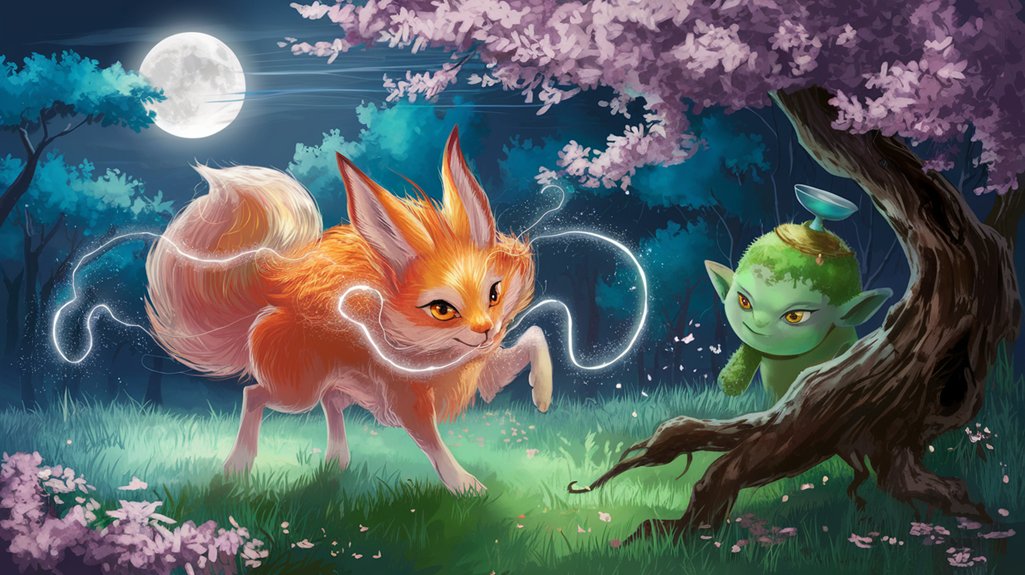
Fox spirits with up to nine tails, masters of illusion who serve the deity Inari. Can be benevolent messengers or cunning tricksters.
Oni
Fearsome ogre-demons with horns, wild hair, and iron clubs. They punish the wicked in the Buddhist hell realms.
Ryū
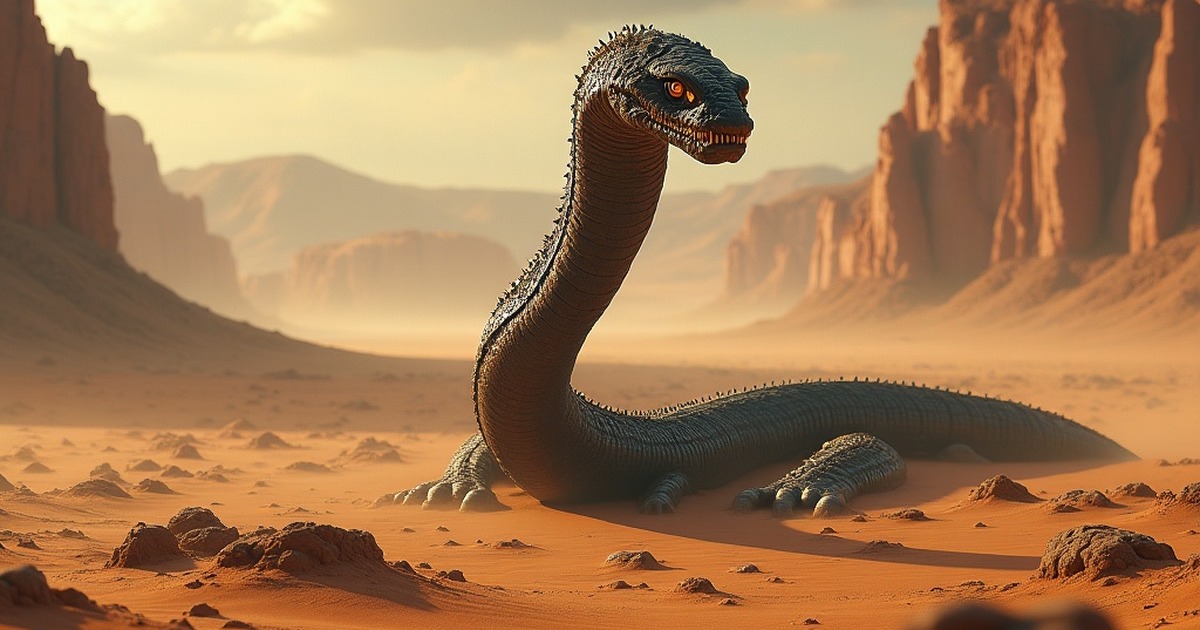
Benevolent serpentine dragons associated with water, weather, and the sea. Unlike Western dragons, they bring good fortune.
Tanuki
Shapeshifting raccoon dogs famous for their mischief, magic, and comically oversized attributes in folklore.
Yūrei
Ghosts of the restless dead bound to the mortal world by strong emotions—vengeance, love, or sorrow.
Tengu
Bird-like mountain spirits and legendary martial artists. Once considered demons, now seen as protective spirits.
Kappa
River imps with water-filled head cavities. They challenge travelers to sumo but can be defeated with politeness.
Tsukumogami
Objects that gain spirits after 100 years—animated umbrellas, lanterns, and household items seeking recognition.
⚜
The Living Spirit World
Japanese mythology is unique in that the supernatural is not separate from daily life—it permeates every aspect of existence. The concept of yōkai (supernatural creatures) encompasses everything from terrifying demons to playful spirits, while kami (divine spirits) inhabit natural phenomena, ancestors, and even man-made objects.
The belief in animism—that all things possess a spiritual essence—means that mountains, rivers, trees, and even everyday objects can become sacred or haunted. This worldview is expressed through Shinto, Japan's indigenous religion, which recognizes eight million kami.
Yōkai stories served many purposes: explaining natural phenomena, teaching moral lessons, and providing entertainment during long winter nights. The great yōkai encyclopedist Toriyama Sekien catalogued hundreds of spirits in his 18th-century illustrated bestiaries, preserving folklore that continues to inspire manga, anime, and video games today.
Explore Japanese Mythology
Discover the complete bestiary of Japanese spirits—from the hundred yōkai of legend to the great kami of nature.