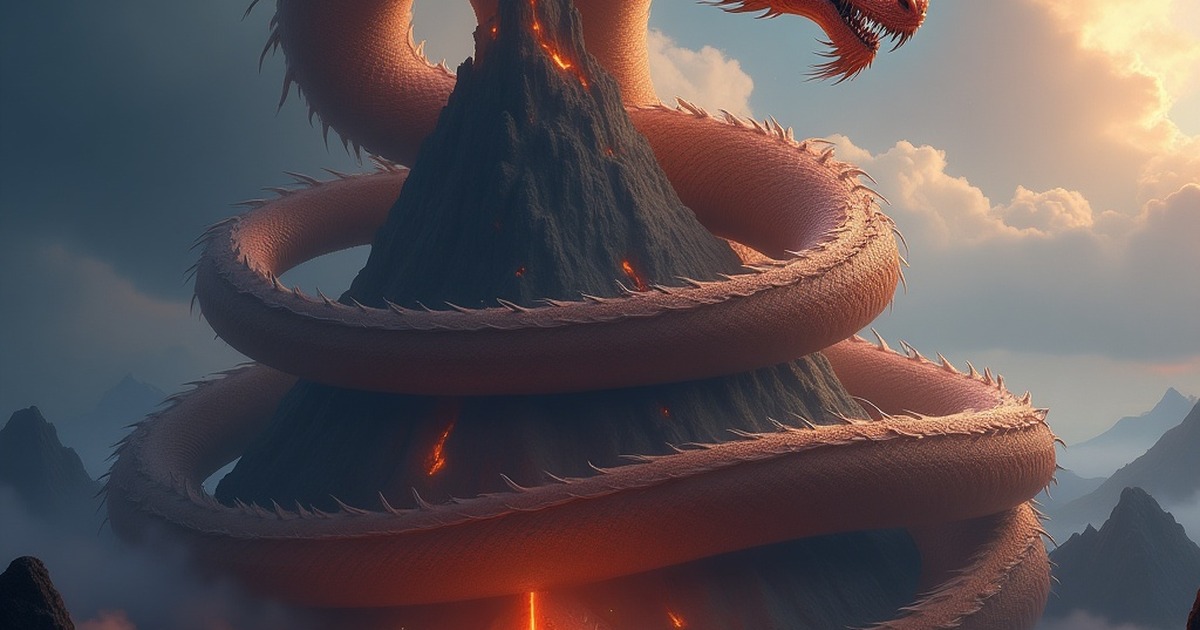
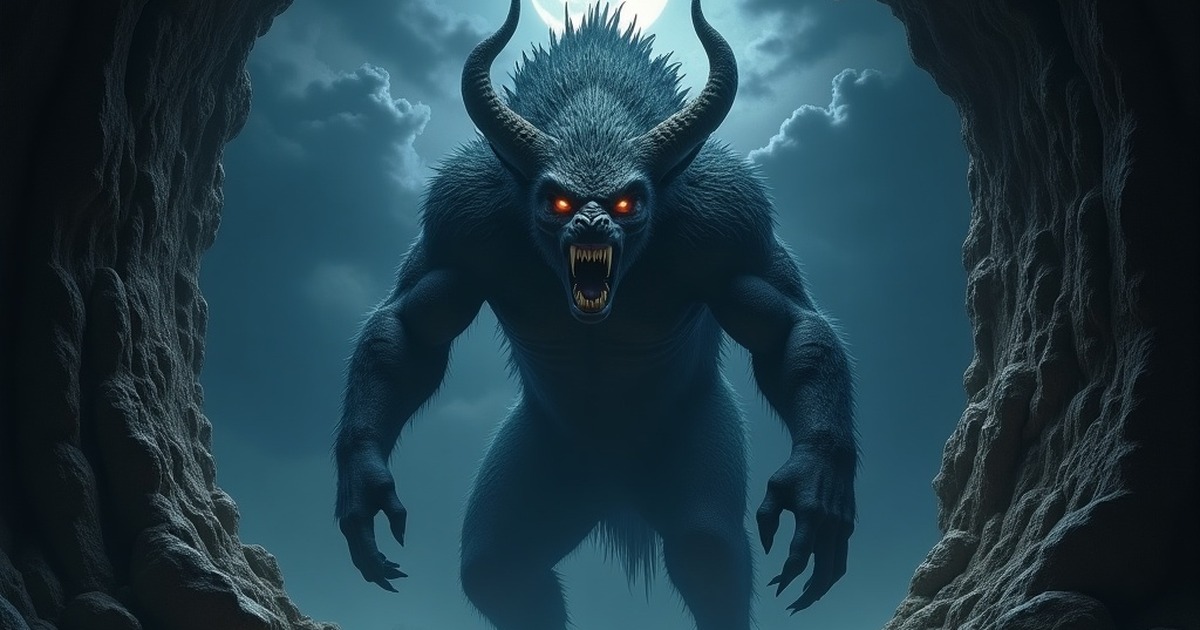
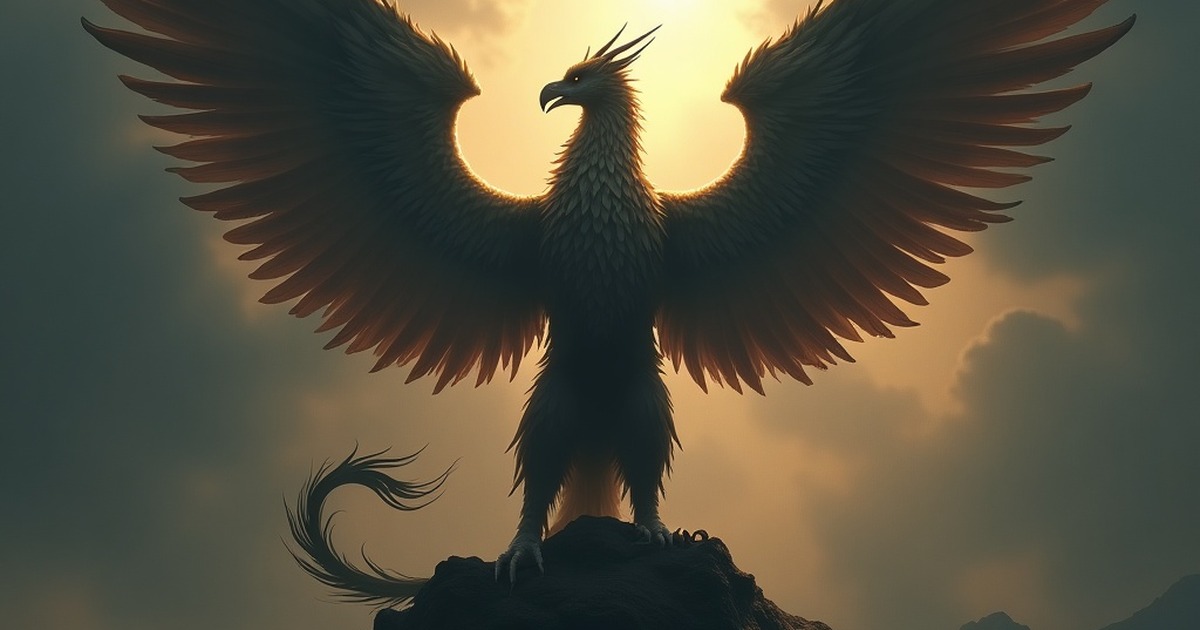
Upon the peak of Mount Alburz, where the cosmic mountain touches the heavens, nests the magnificent Simurgh (سیمرغ). This colossal bird of Persian mythology represents divine wisdom, healing, and the connection between heaven and earth. Ancient enough to have witnessed the destruction of the world three times, the Simurgh carries the knowledge of all ages.
Origins and Etymology
The name Simurgh derives from the Avestan “mərəγō Saēnō” (the bird Saēna), with “Si-” meaning thirty or eagle. In Pahlavi texts, it became “Sēnmurw,” eventually evolving into the Persian Simurgh. This ancient being appears in texts spanning from the Avesta to the Shahnameh, Persia's national epic.
Appearance
The Simurgh is described as a creature of extraordinary beauty and size:
- Large enough to carry an elephant or whale
- Plumage of copper, with the head of a dog and claws of a lion in some depictions
- Feathers of orange, copper, and peacock colors
- Sometimes depicted as having a human face, representing its wisdom
The Simurgh's nest sits in the Tree of All Seeds, from which every plant in existence grows.
Powers and Wisdom
The Simurgh possesses remarkable abilities:
- Healing: Its feathers can cure any wound or illness
- Wisdom: It knows all languages and possesses all knowledge
- Purification: It purifies the land and water
- Resurrection: In some tales, it can restore life
The Simurgh and Zal
In the Shahnameh, the Simurgh plays a crucial role in the story of Zal. When the albino prince was abandoned as an infant, the Simurgh found and raised him, teaching him wisdom and nobility. When Zal later needed to save his wife Rudabeh during difficult childbirth, the Simurgh appeared to instruct physicians in performing the first cesarean section in literature.
Related Creatures
The Simurgh shares attributes with the Phoenix and the Hindu Garuda. Its role as a divine bird of wisdom parallels the Chinese Fenghuang. In Islamic mysticism, the Simurgh appears in Attar's “Conference of the Birds” as a symbol of divine unity.