- Episode Summary
- Episode Summary
- The King and the Land Are One: Understanding the Sympathetic Bond
- Beyond Europe: The Universal Pattern of the Wounded Center
- The Dolorous Stroke: More Than a Physical Wound
- The Weapon as a Symbol of Traumatic Legacy
- The Healing Question: Why Attention Is the Antidote
- The Modern Wasteland: Recognizing the Myth in Our World
- Listen Now: The Fisher King and the Wounded Land
- You Might Also Enjoy
- Related Posts
We all know the stories—the epic battles, the tragic heroes, the meddling gods. But what if the myths we cherish are more than just stories? What if they are a language, a pattern of understanding that our ancestors used to describe the very fabric of reality and the human condition? On the latest episode of The Old Fires, we peel back the layers of one of mythology's most haunting and persistent patterns: the Wounded King and the Wasteland. This archetype, which finds a powerful parallel in the real history behind the Trojan War where a single conflict shattered a civilization, reveals a profound truth about how our collective pain manifests in the world around us.
The King and the Land Are One: Understanding the Sympathetic Bond
The core tenet of the Fisher King myth is the concept of sympathetic magic—the idea that the ruler and their domain are intrinsically linked. The king is not merely a political leader; he is the sacred center, the embodiment of the land's vitality and order. This concept is far older than the Arthurian legends. In ancient cultures from Ireland to India, the health of the king was directly tied to the fertility of the soil, the abundance of the harvest, and the stability of the realm.
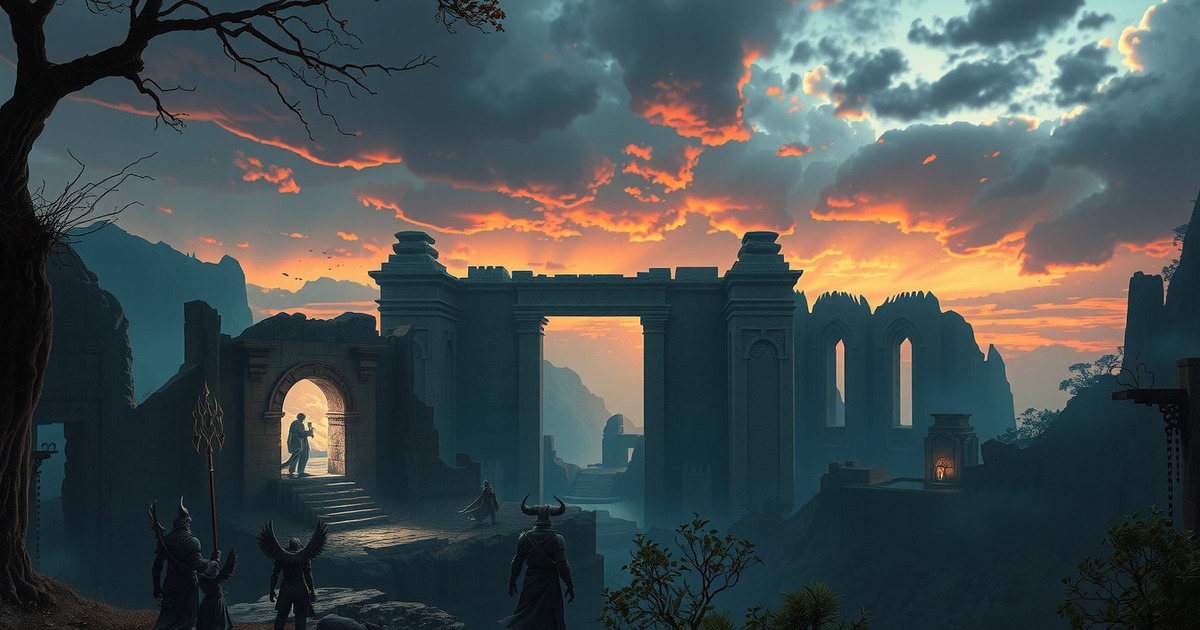
When the king is wounded, this sacred connection is severed. The land doesn't just metaphorically suffer; it literally becomes a reflection of his inner state. Chrétien de Troyes' description of la terre gaste is chilling in its specificity: rivers dry up, crops fail, and people lose their way both physically and spiritually. This isn't a simple punishment from the gods; it is a sympathetic decay. The kingdom becomes a body with a festering wound at its very heart, and the entire system begins to shut down. This idea challenges our modern separation of leader and land, suggesting that true leadership is a sacred, energetic contract with the people and the earth itself.
Beyond Europe: The Universal Pattern of the Wounded Center
While the Fisher King is the most famous example, this pattern is a global phenomenon. In our exploration of Norse myths, we see a similar theme during the Fimbulwinter, the great winter that precedes Ragnarök, often triggered by the breaking of sacred bonds and the death of a god like Baldr. The Greek world offers a potent parallel. The story of Adonis, a youthful fertility god gored by a boar, connects his wound to the withering of vegetation, with the red anemone springing from his blood. Even the epic tale of the real history behind the Trojan War can be viewed through this lens—the abduction of Helen (a violation of a sacred bond) acts as a “Dolorous Stroke” against the Greek world, leading to a decade of war, famine, and societal desolation that echoes the desolation of a waste land.
The Dolorous Stroke: More Than a Physical Wound
The name given to the attack that cripples the Fisher King is profoundly telling: the Dolorous Stroke. This translates to “the blow of great grief” or “the sorrowful strike.” This framing immediately tells us that this is no ordinary battle injury. It is a wound infused with tragedy, regret, and profound meaning.
Later versions of the legend, particularly those in the Vulgate Cycle, identify the weapon as the Spear of Longinus—the very spear that pierced Christ's side on the cross. This fusion of a pagan Celtic motif with Christian relic lore is a masterstroke of mythological syncretism. It elevates the king's wound from a personal tragedy to a cosmic event. The Dolorous Stroke is not just an attack on a man; it is a re-enactment of a foundational wound in Western consciousness. It symbolizes the moment sacredness is violated, wholeness is fractured, and the world is plunged into a state of spiritual ambiguity and suffering. The king's unhealing wound is a perpetual reminder of that original, world-shattering trauma.
The Weapon as a Symbol of Traumatic Legacy
The nature of the weapon is crucial. A spear is an instrument of penetration and violation. It represents a violent intrusion that shatters wholeness. That this specific spear is also a relic means it carries the weight of its own history—it is an object of immense power, both sacred and cursed. The king's wound, therefore, is not just physical. It is a spiritual and psychological trauma that he carries, a legacy of violence that he cannot shed. This resonates deeply with modern understandings of trauma, how a single catastrophic event can leave a person—or a people—frozen in time, unable to move past the moment of impact, their personal wasteland a constant reflection of that unresolved pain.
The Healing Question: Why Attention Is the Antidote
Perhaps the most radical aspect of the Fisher King story is its prescribed cure. Healing does not come from a magical potion, a daring feat of arms, or the intervention of gods and goddesses. It comes from a question. The knight Perceval's failure is his failure of empathy. He sees the solemn procession of the Grail, he sees the limping king, and he remains silent, adhering to a knightly code that warns against speaking out of turn.
His inaction is the final curse on the land. The healing would have been activated by the simplest, most human of questions: “What ails you?” or “Whom does the Grail serve?” This is the profound magic of witnessing. The cure for the collective wound is attention, compassion, and the courage to acknowledge pain. The kingdom languishes not because the wound is inherently unhealable, but because no one has the presence of mind to directly address the suffering at its center. In a world that often values action over connection and solutions over listening, the Grail legend reminds us that the first and most powerful step toward healing is to see someone's pain and to ask about it.
The Modern Wasteland: Recognizing the Myth in Our World
The reason the Fisher King myth won't leave us alone is because we are living in it. We don't have to look far to see modern terres gaste. We can see it in communities blighted by economic despair, where the loss of industry acts as a Dolorous Stroke. We see it in the psychological landscape of a generation grappling with anxiety, often rooted in unresolved collective traumas. The myth provides a framework for understanding how a foundational wound—be it a war, a financial crash, or a social injustice—can ripple outward, causing everything from environmental degradation to a crisis of meaning.
Films like Mad Max: Fury Road are direct translations of this myth. A tyrant, Immortan Joe, hoards the water (the modern Grail) and rules over a literal desert wasteland, his diseased body a mirror of his poisoned realm. The hero's journey is not to defeat him in a traditional sense, but to break the cycle by offering a different kind of leadership—one based on compassion and the equitable distribution of life-giving resources. The myth endures because it gives us a vocabulary for the brokenness we feel around us and, more importantly, points toward the kind of empathetic courage required to mend it.
Dive deeper with our recommended mythology reading list, featuring essential texts on Arthurian legend and the Grail myths that continue to shape our stories.
Listen Now: The Fisher King and the Wounded Land
This article only scratches the surface of this deep and resonant myth. In the full episode of The Old Fires, we journey from the Celtic cauldrons of rebirth to the Grail castles of medieval romance, tracing the path of this story and exploring why the question “What ails you?” might be the most important one we can ever ask. Listen now to uncover the real history behind one of mythology's most powerful patterns.
Listen to the episode: You can find “Real History Behind The Trojan War” and all episodes of The Old Fires on Transistor or wherever you get your podcasts.
Every week, a new myth. Subscribe to Mythical Archives for deep-dive episode recaps and exclusive scholarly notes.
This post is a companion to the “Real History Behind The Trojan War” podcast episode. The episode is the authoritative version; this article expands on its themes for readers and search engines.
Related Posts




Your Weekly Dose of Inspiration
Journaling ideas, family tips, and gentle inspiration.