Minotaur
The Bull-Headed Terror of the Labyrinth
Overview
The Minotaur remains one of Greek mythology's most enduring monsters—a creature of terrible contradictions, bearing the body of a man and the head of a bull, imprisoned in an inescapable maze, fed on human flesh yet born of divine punishment rather than malice.
Known by the name Asterion (“starry one”), the Minotaur was the monstrous offspring of Queen Pasiphaë of Crete and a magnificent white bull sent by Poseidon. His birth was the culmination of a divine curse, and his existence became a source of shame for King Minos, who commissioned the legendary architect Daedalus to construct an elaborate prison from which no one could escape: the Labyrinth.
Within those twisting corridors, the Minotaur prowled for years, fed on Athenian youths sent as tribute—seven young men and seven young women every nine years—until the hero Theseus arrived to end the creature's reign of terror.
The Curse of Minos
Poseidon's Gift
When Minos prayed to Poseidon for a sign that he was the rightful king of Crete, the sea god answered by sending a magnificent white bull from the waves. Minos was to sacrifice this divine gift back to Poseidon, but the bull was so beautiful that the king kept it for himself, substituting an ordinary animal.
Divine Vengeance
Enraged by this disrespect, Poseidon enlisted Aphrodite to curse Queen Pasiphaë with an unnatural passion for the white bull. Desperate to fulfill her maddening desire, Pasiphaë commissioned Daedalus to build a hollow wooden cow covered in real cowhide. Hiding within this contraption, she was able to mate with the bull, and from this union, the Minotaur was born.
The Labyrinth
Unable to kill the monster (perhaps due to religious prohibition or parental attachment), Minos ordered Daedalus to construct an inescapable prison. The architect created the Labyrinth—a maze of such complexity that even its builder needed to mark his path. Here the Minotaur was confined, fed on human sacrifices to satisfy its cannibalistic hunger.
The Hero's Quest
Athenian Tribute
After Minos's son Androgeus was killed in Athens (either in games or assassination, depending on the source), Minos waged war and forced Athens to pay a terrible tribute: every nine years, fourteen Athenian youths would be sent to Crete to be devoured by the Minotaur.
Theseus Volunteers
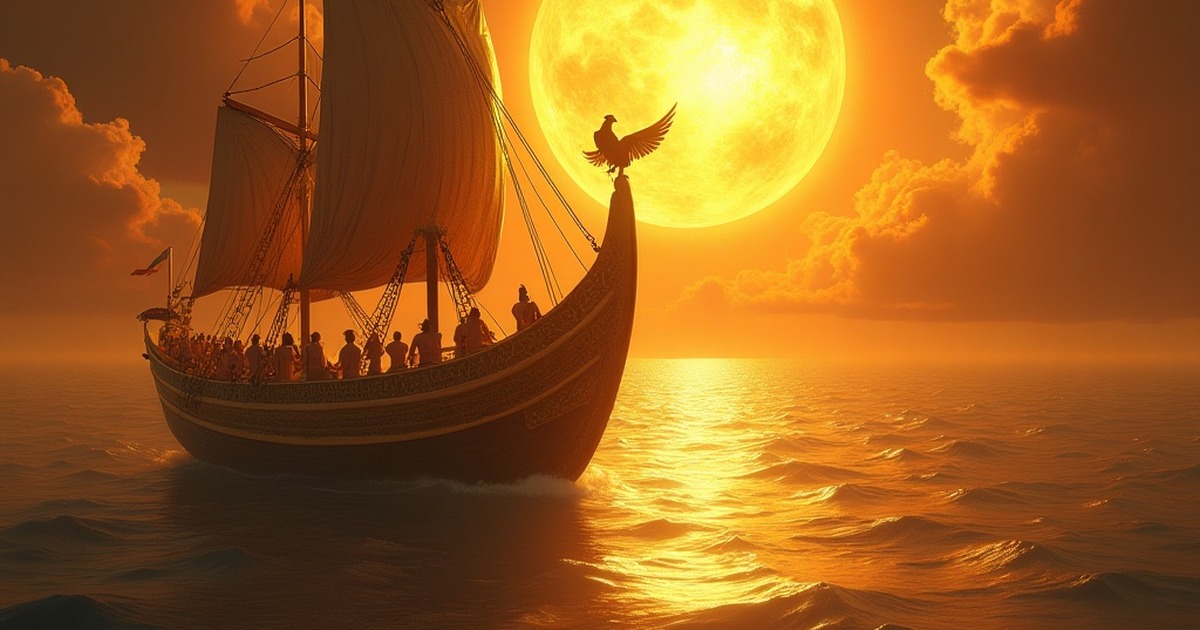
When the third tribute came due, Prince Theseus volunteered to go as one of the victims, secretly planning to slay the monster. He promised his father, King Aegeus, that if successful, he would return with white sails instead of the black sails of mourning.
Ariadne's Thread
Upon arriving in Crete, Theseus caught the eye of Princess Ariadne, Minos's daughter and the Minotaur's half-sister. Falling in love with the Athenian prince, she provided him with a sword and a ball of thread. Theseus tied the thread at the Labyrinth's entrance and unspooled it as he ventured deeper, ensuring he could find his way back.
The Slaying
Deep in the maze, Theseus found the Minotaur—accounts differ on whether he used the sword, his bare hands, or both. After a fierce battle, the hero slew the beast, following Ariadne's thread back to freedom and escaping Crete with the princess. Tragically, Theseus forgot to change his sails, and seeing the black canvas, Aegeus threw himself into the sea—forever after called the Aegean.
Attributes & Abilities
Superhuman Strength
The Minotaur possessed the brute strength of a bull combined with human cunning, making it a formidable opponent in combat.
Labyrinth Mastery
Having spent its entire life in the Labyrinth, the Minotaur knew every twist and turn, using the maze itself as a weapon against intruders.
Enhanced Senses
The bull's head granted keen senses of smell and hearing, allowing the creature to track prey through the dark corridors.
Terror Incarnate
The Minotaur's very existence inspired such dread that victims often died of fear before the monster could reach them.
Symbolism & Legacy
The Monster Within
Modern interpretations often see the Minotaur as representing the beast within humanity—our base instincts and violent urges that civilization attempts to contain. The Labyrinth becomes the complex structures we build to hide our darker natures, while Theseus represents the heroic struggle to confront and overcome our inner demons.
Archaeological Connections
The Palace of Knossos on Crete, with its complex, maze-like architecture, may have inspired the Labyrinth legend. Bull imagery pervades Minoan culture—bull-leaping frescoes, bull-head rhytons, and the sacred double-axe (labrys, from which “labyrinth” derives) suggest that the Minotaur myth grew from genuine Minoan religious practices.
🏛️ Historical Context
The Minotaur myth may encode historical memory of Minoan Crete's dominance over the Greek mainland. The “tribute” of Athenian youth could represent political subjugation, while Theseus's victory symbolizes Greek independence. The association of Cretans with bulls may have seemed monstrous to mainland Greeks, transforming cultural difference into literal monstrosity.
Continue Your Journey
The Minotaur's tale connects to many other monsters and heroes of Greek mythology. Explore more creatures of ancient Greece: