The Monstrous Fenrir
The great wolf of Norse mythology, son of Loki and the giantess Angrboda—a creature so terrifying that even the gods feared him, bound by magical chains until the day he breaks free to devour Odin at Ragnarök.

Overview: The Wolf That Will End the World
Fenrir (Old Norse: “fen-dweller”), also known as Fenrisulfr (“Fenrir's wolf”) or simply the Wolf, represents one of the most terrifying figures in Norse mythology. He is no ordinary beast but a cosmic force of destruction—a creature whose very existence threatens the stability of the nine worlds and whose breaking of his chains will herald the end of everything.
Born to the trickster god Loki and the giantess Angrboda (“Bringer of Grief”) in the iron forests of Jötunheimr, Fenrir was the eldest of three monstrous siblings. His brother Jörmungandr became the World Serpent encircling Midgard, and his sister Hel became the goddess of the dishonorable dead. All three children were prophesied to bring catastrophe to the Aesir gods.
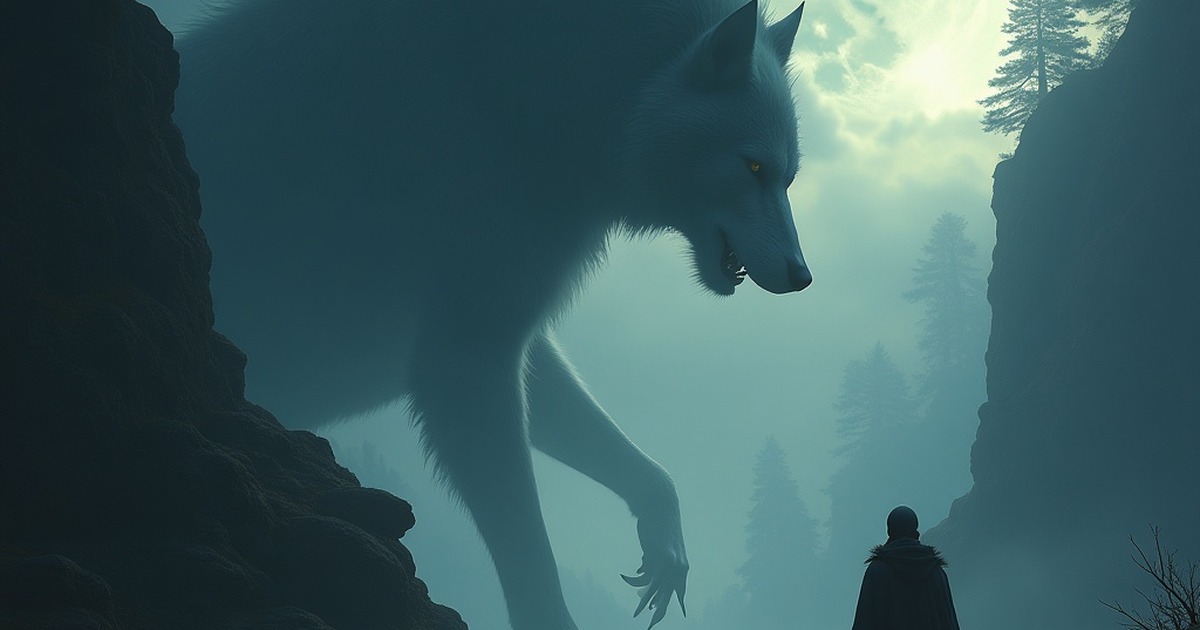
Unlike his siblings, who were cast away immediately, the young Fenrir was raised in Asgard itself—a decision that would prove both necessary and fateful. The gods hoped to tame him; instead, they watched in horror as he grew larger and more powerful with each passing day, until even the bravest among them trembled at his approach.
“Then the Fenris-Wolf opened his mouth exceedingly wide, and his lower jaw was against the earth, and the upper against heaven; he would have gaped more widely still if there were room.” — Prose Edda
The Binding of the Wolf
As Fenrir grew to monstrous proportions, the gods realized they could not allow him to roam free. Yet killing him within Asgard's sacred grounds was forbidden—such an act would defile their holy realm. Instead, they devised a plan to bind him.
The First Two Chains
The gods first crafted a mighty iron chain called Læðingr. Approaching Fenrir, they challenged his strength, asking if he could break free. The wolf, confident in his power, allowed them to bind him—and snapped Læðingr with a single flex of his muscles.
Undeterred, the gods forged Drómi, a chain twice as strong as the first. Again they challenged Fenrir, and again he accepted, knowing that fame awaited any who could perform such feats of strength. With greater effort, he shattered Dromi as well.
Gleipnir: The Impossible Chain
Desperate, Odin sent the god Skírni to Svartalfáheimr, the realm of the dwarves, to commission a binding that could not be broken. The master craftsmen created Gleipnir, a ribbon smooth as silk yet stronger than any chain. It was forged from six impossible things:
Cat's Footfall
The sound of a cat walking
Woman's Beard
A beard from a woman's face
Mountain Roots
The roots of a mountain
Bear Sinews
The sinews of a bear
Fish Breath
The breath of a fish
Bird Spittle
The spittle of a bird
This is why, the Norse explained, cats make no sound when they walk, women have no beards, mountains have no visible roots, and fish have no breath—these things were used up in Gleipnir's making.
Týr's Sacrifice
When the gods presented the silken ribbon, Fenrir grew suspicious. He agreed to be bound only if one of the gods placed their hand in his mouth as a pledge of good faith. Only Týr, god of war and oaths, had the courage to accept.
As Gleipnir tightened and Fenrir realized he could not escape, he bit down, severing Týr's right hand. The god's sacrifice saved Asgard—but at a terrible personal cost. Týr's courage and the loss of his sword hand became legendary, representing the price of honor and the binding of chaos.
Fenrir's Imprisonment
Once bound, Fenrir was transported to a lonely place far from Asgard. The gods drove a sword through his jaws—the hilt against his lower jaw, the point against the roof of his mouth—forcing him to remain forever with his mouth propped open, unable to close his terrible jaws.
There Fenrir lies still, howling in rage and pain. The drool that flows from his gagged maw forms a river called Ván (“Hope”). He strains constantly against Gleipnir, and with each passing age, the magical ribbon weakens imperceptibly.
The prophecies say that Fenrir will remain bound until the coming of Fimbulwinter—three years of endless winter with no summer between. When this terrible season ends, Gleipnir will finally snap, and the wolf will be free to fulfill his destiny.
Ragnarök: The Final Battle
When Fenrir breaks free at Ragnarök (Old Norse: “Fate of the Gods”), he will be the instrument of cosmic destruction. His role in the apocalypse is central and terrifying:
The Wolf Unbound
As Gleipnir snaps, Fenrir will rise with fury accumulated over ages of imprisonment. He will run across the world with his jaws agape—his lower jaw scraping the earth, his upper jaw touching the sky. Flames will burst from his eyes and nostrils, and everything in his path will be consumed.
The Devouring of Odin
In the final battle, Fenrir will face Odin, the Allfather himself. Despite wielding the mighty spear Gungnir, despite all his wisdom and power, Odin is fated to fall. Fenrir will swallow the king of the gods whole, avenging his long imprisonment and fulfilling the prophecy that the Aesir so desperately tried to prevent.
Víðarr's Vengeance
Yet Fenrir's triumph will be short-lived. Víðarr, Odin's son and the god of vengeance, will step forward wearing a magical shoe made from all the leather scraps ever discarded by humanity. He will place his foot on Fenrir's lower jaw and, grasping the upper jaw with his hands, tear the wolf apart—avenging his father and ending the monster's reign of terror.
Fenrir's Children
Fenrir's legacy extends beyond his own terrible fate. According to some traditions, he fathered two wolves of his own:
Sköll — The Sun Chaser
Sköll (“Treachery”) endlessly pursues the sun goddess Sól across the sky. Every day he draws closer, and during solar eclipses, he catches her briefly in his jaws before she escapes. At Ragnarök, Sköll will finally catch and devour the sun, plunging the world into darkness.
Hati Hroðvitnisson — The Moon Hunter
Hati (“Hatred”) chases the moon god Máni across the night sky. Like his brother, he will succeed only at the world's end, swallowing the moon and completing the celestial catastrophe.
Together with their father, these wolves represent the forces that will unmake the very structure of the cosmos—destroying sun, moon, and the king of gods in a single generation of wolves.
Symbolism & Legacy
Fenrir embodies numerous themes central to Norse mythology and continues to resonate in modern culture:
The Inevitability of Fate
Despite their best efforts, the gods cannot escape their destiny. By trying to prevent the prophecy—raising Fenrir, binding him, preparing for Ragnarök—they may have ensured its fulfillment. This fatalistic worldview permeates Norse mythology.
The Price of Fear
The gods' treatment of Fenrir raises moral questions. Was he always destined to be evil, or did their fear and preemptive cruelty create the monster they dreaded? The wolf's rage seems justified—he was imprisoned for crimes he had not yet committed.
Chaos vs. Order
Fenrir represents primal chaos—a force that cannot be controlled, only temporarily contained. His eventual freedom symbolizes the understanding that order is temporary, and chaos will ultimately reclaim all things.
Modern Appearances
Fenrir appears throughout modern media—in Marvel comics and films, video games like God of War, SMITE, and Final Fantasy, literature, and metal music. His image as the ultimate predator, the wolf that devours gods, continues to capture imaginations worldwide.
Explore More Norse Mythology
Discover the gods, giants, and monsters of the Viking world—from Odin's wisdom to Thor's thunder.